


Turtle Stewardship Program
We've launched our first Turtle Stewardship Program with support from the City of Owen Sound, Parks Canada, and the Bruce Men’s Shed. This program aims to support two species at risk – the Snapping Turtle and the Painted Turtle - in areas across our watershed.
This initiative focuses on advocating for our local turtle populations, spreading awareness about their lifecycle and the adversities they face, as well as incorporating conservation initiatives to support these threatened species. The program combines data collection, nest and hatchling monitoring, creating and installing nest protectors, and public education to reduce road mortality.
This program is funded by TD Friends of the Environment Foundation, the Jane Goodall Institute of Canada’s A.P.E. Fund, and the Greenbelt Foundation.

Ways to Support the Program
There are many ways to get involved and make a difference!
Volunteer
Join our passionate team of volunteers and help with on-the-ground efforts like monitoring nesting sites and installing nest protectors. Register here
Make a Donation
Your financial support helps us purchase supplies needed to expand and sustain the program. Make a donation here

Donate Equipment & Supplies
We’re in need of specific items to support our volunteer team:
Red marker flags, mallets, 8–10” metal stakes, weighted pylons, safety vests, work gloves, zip ties, untreated lumber (8′ x 4″), 3″ deck screws, 1/2″ galvanized hardware cloth (2′ x 2′ square), 8-10″ steel edging spikes, stake flag.
Build a Nest Protector
We’re always looking for people to assemble nest protectors. We’ll provide the instructions - just reach out to get started.

Have questions or want to get involved?
Contact the Program Coordinator:
Chelsea Vieira: education@greysauble.on.ca
If you find an injured turtle, please contact the Ontario Turtle Conservation Centre: 705-741-5000 or the S.T.A.R.T Hotline: 705-955-4284
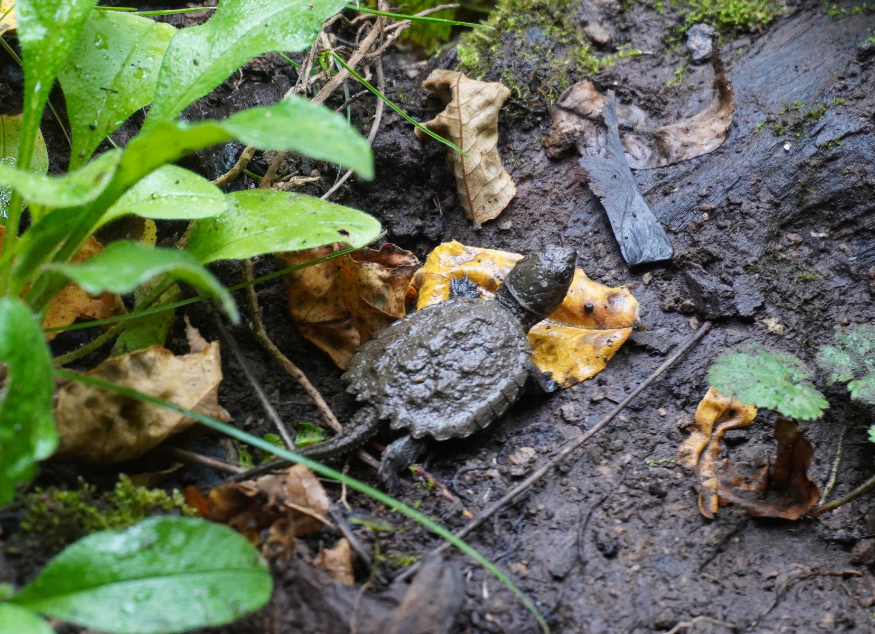
What to do if you see turtle hatchlings?
- Watch your step! Hatchlings are tiny, well-camouflaged, and can be difficult to see. Check carefully around nest boxes, surrounding vegetation, and nearby roads.
- Look for signs of emergence. A small hole approximately 2–4 cm wide (about the size of a toonie) may indicate that hatchlings have emerged.
- If you need to handle a hatchling, wear clean gloves. This protects you from potential exposure to Salmonella and protects the hatchling from soaps, lotions, sunscreen, or other substances that may be on your hands.
- Keep hatchlings off roads and away from traffic. If a hatchling is at risk, place it in an empty container, keep it out of direct sunlight, and move it to the nearest suitable wetland, river, or watercourse.
- Release hatchlings at the water’s edge, not directly in the water. Place them in vegetation and away from busy areas or traffic. When possible, spread hatchlings out in different areas of the same wetland.
- When in doubt, leave hatchlings undisturbed and contact GSCA for guidance.
Thank you to our sponsors!
Their support helps us delivery the Turtle Stewardship Program throughout the Grey Sauble watershed.